
News
Lunar New Year 2026: The Year of the Fire Horse Begins
Today, February 17, 2026, marks the beginning of the Year of the Fire Horse. The Lunar New Year, also known as Chinese New Year or the Spring Festival, begins today and will be celebrated over the next 15 days, culminating in the vibrant Lantern Festival on March 3, 2026.
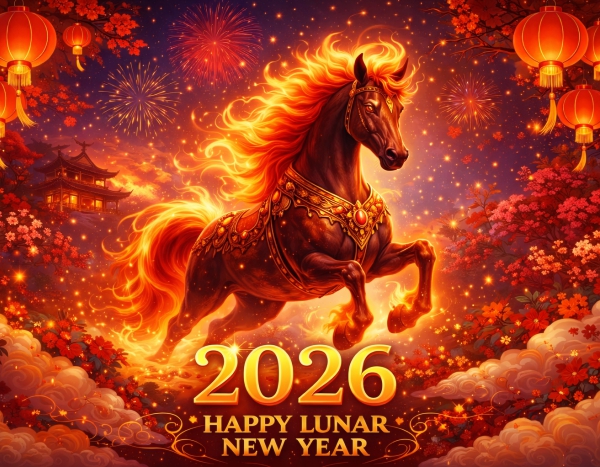 Chinese New Year – The Year of the Fire Horse
This festive occasion remains one of the most significant annual celebrations in the world. Observed across China and throughout Asia, and embraced by Asian communities globally, Lunar New Year is celebrated by more than 1.5 billion people, representing over 20% of the world’s population.
While rooted in Chinese culture, the Lunar New Year is also officially celebrated in countries such as Vietnam, South Korea, Singapore, Malaysia, and beyond, each with its own distinct customs and traditions.
The Zodiac Transition
The Lunar New Year marks the transition between zodiac signs in the traditional Chinese lunisolar calendar. While 2025 was the Year of the Wood Snake, 2026 ushers in the Year of the Fire Horse.
Unlike the Gregorian calendar, the Chinese calendar follows a 60-year cyclical system that combines the 12 zodiac animals (Rat, Ox, Tiger, Rabbit, Dragon, Snake, Horse, Goat, Monkey, Rooster, Dog, and Pig) with the five elements (Wood, Fire, Earth, Metal, and Water). This ancient system has been in continuous use for nearly two millennia.
The combination of animal and element creates a unique energetic signature for each year. The Fire Horse last appeared in 1966, making 2026 a return of a particularly dynamic zodiac pairing.
The Fire Horse
The Horse is traditionally associated with strength, speed, freedom, and determination. It symbolizes forward momentum and adventurous spirit. When combined with the Fire element, which represents passion, transformation, and intensity, the result is a year often described as bold, energetic, and action-oriented.
In Chinese astrology, Fire amplifies the natural characteristics of the Horse. The Year of the Fire Horse is therefore expected to emphasize leadership, courage, rapid change, and decisive movement. It is seen as a year that favors innovation, ambition, and confident steps forward.
People born in the Year of the Horse are often described as independent, charismatic, hardworking, and enthusiastic. The influence of Fire suggests heightened creativity and strong drive, but also a need for balance and thoughtful direction.
The Legend of the Horse in the Zodiac
According to Chinese legend, the order of the zodiac animals was determined by a great race organized by the Jade Emperor. The Horse, known for its speed, was expected to place higher, but just before crossing the finish line, the Snake, who had secretly wrapped itself around the Horse’s hoof, startled it and slipped ahead. As a result, the Snake became sixth in the zodiac cycle and the Horse seventh.
This story highlights the Horse’s strength and stamina, but also serves as a reminder that strategy can sometimes outmaneuver speed alone.
The Year Ahead
In Chinese astrology, 2026 is anticipated to be a year of movement and momentum. Where the Snake year emphasized strategy and careful planning, the Fire Horse year encourages action and visible progress.
It may be a time marked by bold initiatives, dynamic leadership, technological advancement, and social energy. The Fire Horse carries a spirit of expansion, a fitting theme in a rapidly evolving global landscape.
A Symbol for a Changing World
The Year of the Fire Horse arrives at a time when global cooperation, environmental responsibility, and innovation are more important than ever. The Horse’s symbolism of strength and forward momentum resonates strongly in the Arctic context, where rapid climate change, scientific collaboration, and sustainable development demand decisive yet balanced action. The Fire element’s association with transformation reflects both the urgency of environmental shifts in the North and the opportunities for bold leadership in renewable energy, research partnerships, and international dialogue. As Arctic communities and global partners navigate an era of change, the spirit of the Fire Horse serves as a reminder that progress requires courage, cooperation, and a clear sense of direction.
Lunar New Year Celebrations
Though traditions vary by country and community, several customs remain central to Lunar New Year celebrations:
Family Reunions – New Year’s Eve is marked by reunion dinners, one of the most important gatherings of the year, symbolizing unity and continuity.
Red Envelopes (Hóngbāo) – Elders gift red envelopes containing money to children and younger relatives as a symbol of luck and prosperity.
Lion and Dragon Dances – Public performances bring color, rhythm, and energy to city streets, believed to ward off evil spirits and attract good fortune.
Fireworks and Firecrackers – The explosive sounds and bright lights traditionally serve to drive away negativity and welcome a fresh start.
Lantern Festival – The celebrations conclude with glowing lantern displays, riddles, cultural performances, and symbolic foods such as sweet rice dumplings (tāngyuán), representing reunion and harmony.
A Global Celebration of Renewal
At its heart, the Lunar New Year is about renewal, hope, and connection. It marks not only the arrival of spring in the traditional calendar but also the reaffirmation of family bonds, cultural heritage, and shared aspirations for the year ahead.
As the Year of the Fire Horse begins, its spirited and forward-looking energy offers a powerful symbol for 2026 — a year to move confidently, embrace change, and gallop toward new horizons.
Source: Chinese New Year
The tags below provide an opportunity to view previously posted related news within the selected category