
News
Calotte Academy - Call for Participation & Papers
The Calotte Academy 2026, with the theme “Intelligence,” is planned to take place from 8 to 14 June 2026. We plan to guide participants on an exciting journey through Sápmi, the northernmost parts of Finland, Norway, and Sweden—through Rovaniemi, Kiruna, Tromsø, Kilpisjärvi, Hetta, Kautokeino, Karasjok, Inari, and Sodankylä.
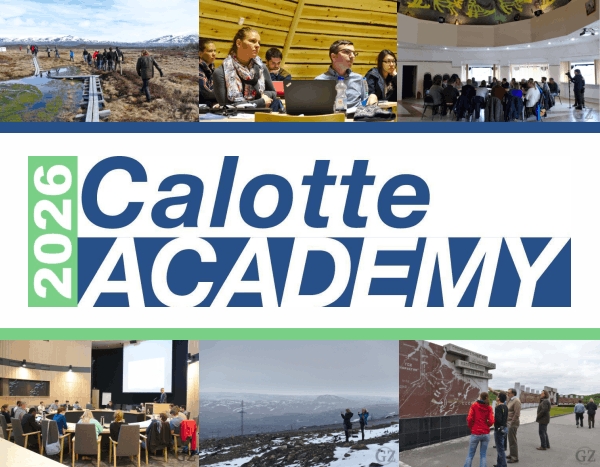 The theme “Intelligence” is inspired from the recent resurgence of the term in particular in the context of the rise of artificial intelligence (AI) or within debates on military intelligence amid increasing geopolitical tension. Yet, the term intelligence is associated with numerous meanings including information or knowledge, cognitive ability, military or espionage, computational intelligence and machine learning, or that of agencies that gather or process secret information. Furthermore, different fields of intelligence may intersect such as the use of AI in data processing within military intelligence.
Calotte Academy 2026 – Key Information
Dates:
8–14 June 2026
Theme:
“Intelligence”
Registration fee:
€475 total
Includes:
Accommodation, transportation, and some meals
Payment:
€300 due by 8 May 2026
€175 at the start
Deadline:
20 April 2026
Apply:
calotte-academy.com/apply
The theme is also inspired by the observation that global multi-crises are not only geopolitical and ecological, but also crises of intelligence: crises of information, decision-making, sense-making, and knowledge production. The tension between militarization and environmentalization is also a tension between competing epistemologies—strategic intelligence, scientific intelligence, Indigenous knowledge, algorithmic prediction, and human cognitive limits. Similarly, the promise of increasing efficiency through AI to reduce human resource consumption for a more sustainable future led to the paradox of a de-facto constantly growing energy demand to power the world’s data centers, underlining the complex relationships between different fields or understandings of intelligence.
This year’s theme is intentionally broad, inviting contributions from a wide range of disciplines and approaches. The multiple meanings of the term as well as their complex relationships and potentially contradictory effects make it a particularly rich concept for interdisciplinary exploration in and about the Arctic. We therefore invite researchers, students, and young policymakers working on/from the Arctic in fields as varied as International Relations, International Law, Education, Political/Social Sciences, Psychology, Neuroscience, Philosophy, History, Geography, Anthropology, Indigenous Studies, Media Studies, Linguistics, Environmental Humanities, and Data Science.
In an era where information is the lifeblood of governance, science, warfare, and society, what does intelligence mean? How does it shift in times of global disorder, climate urgency, and the development of AI? At the same time, conceptions of intelligence are being transformed—expanded by posthumanist, decolonial, Indigenous, cognitive, and technological perspectives. What forms of knowledge and intelligence are recognized, devalued, weaponized, automated, or extracted in the Arctic and beyond? These are the kinds of questions the Calotte Academy 2026 aims to explore.
We particularly welcome discussions, critical analyses, and empirical or methodological insights into (but not limited to) the following topics:
1. Definitions and conceptions of intelligence
- How do different disciplines define and measure intelligence?
- What are cultural, economic, political biases in the measurement or perception of intelligence?
- How do Indigenous conceptions of intelligence enrich or challenge Western models?
2. Artificial intelligence, automation, and algorithms
- What roles does AI play in Arctic governance, environmental monitoring, science, geoeconomics, geopolitics or the military?
- How are AI systems transforming the production of knowledge about the Arctic?
- What risks does AI pose to Arctic democracy, epistemic autonomy, and digital sovereignty regions?
- Information extractivism: how is Arctic data collected, used, and appropriated?
3. Intelligence, security, and geopolitics
- How do intelligence services and security actors mobilize the Arctic in strategies of power, surveillance, and anticipation?
- How is the militarization of the information space transforming the region?
- What does “smart security” mean in a context of rapid changes?
4. Human intelligence, education, and cognition
- How can intelligence be taught in Arctic societies?
- How do Arctic educational approaches conceive of learning, creativity, and cognition?
- What statistical tools are used to study intelligence and what are their limitations?
5. Intelligence in human–nonhuman relations
- How are animals, environments, and technologies endowed with or deprived of intelligence?
- Ecosystem intelligence, climate intelligence: how can they be observed and modeled?
- Posthumanist perspectives in the Arctic context.
6. Research methodologies, epistemologies, and collective intelligence
- How can collective intelligence (among researchers, local communities, and institutions) respond to Arctic challenges?
- What are the ethical issues involved in collecting and interpreting sensitive data in the Arctic?
7. Media, disinformation, and “narrative battles”
- What is happening on the Arctic cyber front?
- How does disinformation affect circumpolar cooperation, political processes, or energy security?
- What role do digital platforms play in shaping or challenging public intelligence?
The 2026 event, like its predecessors, aims to be organized in a spirit of open dialogue and a participatory approach to discuss, examine and analyze relevant Northern / Arctic and global issues. The event uses the dual interplay between science, policy and business, and between scientific and Indigenous knowledge, to educate, mentor and train PhD candidates, post-docs and advanced Master’s students in interdisciplinary studies, and to implement a transdisciplinary dialogue between different local and regional stakeholders.
Embodiment and dialogue are the two core methods of the Calotte Academy. They are combined by the dualism of ‘mobility’, when traveling in several destinations, and having excursions locally, in the European Arctic and Sápmi, and a dialogue, when implementing an open discussion after each participant’s presentation. This twofold approach is participatory by nature, and inspired by the principles of inclusivity, and freedom of expression.
For the third time, the Academy will include a role-playing game with European / Arctic actors represented by the participants. The objective is to simulate international negotiations on the topic of intelligence worldwide and in the Arctic in particular, in the context of a world (dis)order with multi-crises and controversial realities. This year, we ask the question: “Who owns Greenland in June 2026?”
Registration fee
The registration fee for participation is €475, covering accommodation, transportation, as well as some meals during the traveling symposium. Early career researchers who are funded by a university or institute, or who have travel grants for scientific conferences, are invited to check with their respective funders to confirm whether they can cover this fee.
The fee will be paid in two installments: the first installment of €300 one month before the start of the trip and the second installment of €175 at the beginning of the journey.
Beware: Failure to pay for the first installment by 8 May 2026 will result in removal from the program.
Applications – EXTENDED DEADLINE
The present document is the 2nd Call for Participation & Papers destined for early career researchers (PhD candidates, post-docs, advanced master’s students), for established researchers from different academic backgrounds, as well as for young policymakers, to participate in & present their work at the 2026 Academy.
The extended deadline for applications is the 20th of April 2026. An application should include an abstract of approximately 250–350 words, a short bio/CV including (PhD / MA) study status, and a short list of publications. Applications must be submitted online at https://calotte-academy.com/apply.
Co-organizers
The Calotte Academy 2026 is co-organized by the UArctic TN on Geopolitics and Security, and the Northern Policy Society (in Finland), in cooperation with Arctic Portal (Iceland), the Department of Media Studies at Stockholm University, the ETS Institute at Luleå Technical University, the Faculty of Law at the University of Lapland, the International Center for Reindeer Herding Husbandry (EALÁT) (in Kautokeino), Trent University (in Ontario, Canada) and the VERA Centre of Russian and Border Studies at the University of Eastern Finland (in Finland).
About the Calotte Academy
The Calotte Academy is an international, annual academic symposium, traveling throughout several destinations and crossing several borders in the European Arctic. It is designed to promote interdisciplinary research, and implement the interplay between senior & young researchers in order to educate, mentor and train in Northern / Arctic and Global Studies. It is also an experimental “School of Dialogue” and participatory by nature, with the idea to share knowledge and foster academic & policy-oriented dialogue among members of the research community and a wide range of other local & regional stakeholders, including the Sámi.
It consists of full days, spread between morning lectures over a different aspect of the general theme, followed by cultural activities and / or role playing game rounds as well as meaningful discussions, while relocating from place to place with our bus. This is exactly the traveling nature of Calotte Academy, the fact that every day and every different place we visit sparks discussion over something new, while also allowing us to explore the unique nature of Lapland / Sápmi, local cultures and the traditional sauna activity - honoring the true North - as well as the significance of traveling and coexisting with others over a dense 7-day period. We finish our traveling in Sodankylä, as the last stop before arriving back to Rovaniemi,
The annual travelling symposium, organized since 1991, is a perfect platform for early career researchers, particularly PhD candidates and post-docs, as well as established researchers, with different academic & knowledge backgrounds, to actively participate & discuss, and present their work (see our Final Reports of the previous Calotte Academies on our website: https://calotte-academy.com/final-reports and in the Arctic Yearbook editions: https://arcticyearbook.com/).
For more information
For more information, please contact Prof. Lassi Heininen () of the Northern Policy Society, Prof. Laura Junka-Aikio () at the University of Lapland; and the Calotte Academy’s co-coordinators: PhD Candidates Zhanna Anshukova (), Tom Gabriel Royer () at the University of Lapland, Eleni Kavvatha () at UCLouvain – Saint Louis University of Brussels, and M.A. Tatiana Anderson () of the Northern Policy Society.
Source: Calotte Academy
The tags below provide an opportunity to view previously posted related news within the selected category